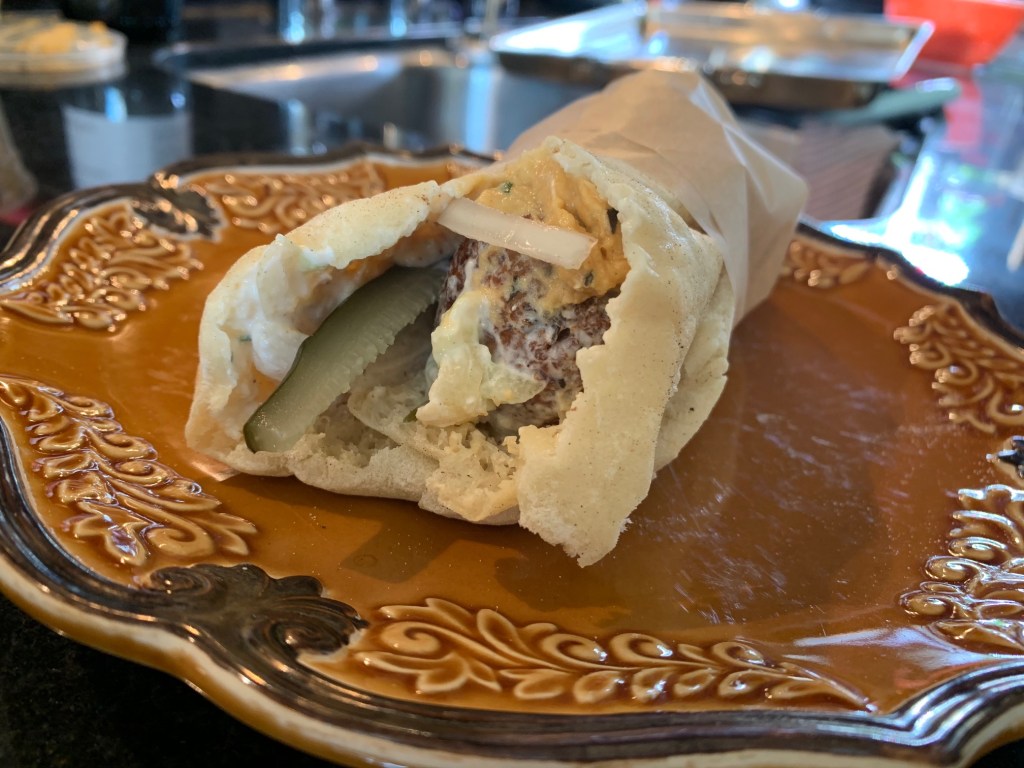
Some sandwiches are a breeze to pull together, others are a commitment. The delightful falafel sandwich is a full-on project, but well worth every step.
And there are many steps: make the falafel balls, make and fry the pita dough, make tahini sauce and a yogurt sauce from scratch (or toum!), marinate sliced onions in lemon juice and sumac, prep the pickle spears (and pickled turnip if you have it).
Let’s start with the falafel mix, which can be made a day ahead of time and kept in the fridge. I scoured the internet for falafel recipes and couldn’t find one alike. I did find a consensus on this point: dried chickpeas are better than canned chickpeas, so I went this route.
I like this falafel recipe the best, but failed to execute it properly, so I had to start all over again. This Food 52 version seems a little less authentic because it involves egg and bread but I decided that might help with the texture, which I failed to nail the first time around. So Food 52 falafel it is, with one adjustment: I used the spices from the original falafel recipe: cumin, coriander, and cardamom. A match made in heaven.
I put 2 cups of dried chickpeas (rinsed) into a pot and generously cover them with water. Put a lid on that thing and let it sit for 24 hours. Note: the pros add 1 tsp of baking soda but I didn’t have any on hand. The next day, drain the chick peas, rinse them, and either put them in a salad spinner to completely dry them off or let sit at room temperature for a few hours, on a dry dish towel.
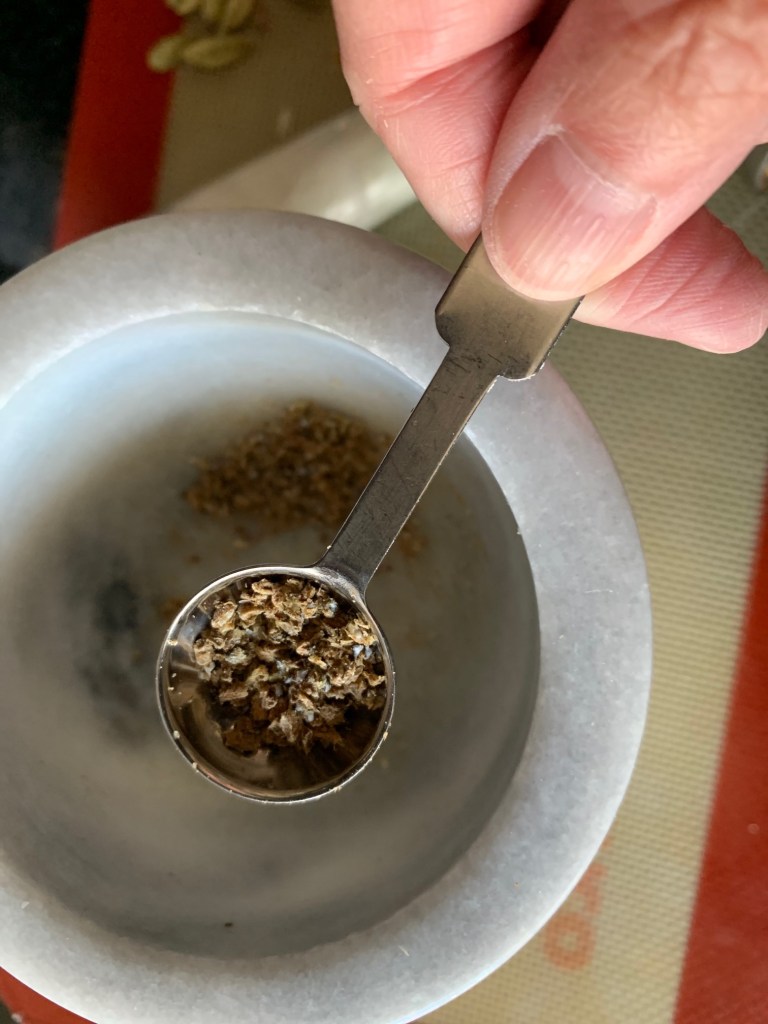
Time to prep the aromatic spices that make falafel such a treasure. In a mortar and pestle, grind 1 tsp cumin and 1 tsp coriander seeds. This might feel tedious, but it’s worth it. Making food is an act of love.

Now take 1 tsp of cardamom pods and smash them in the mortar and pestle to release the seeds.
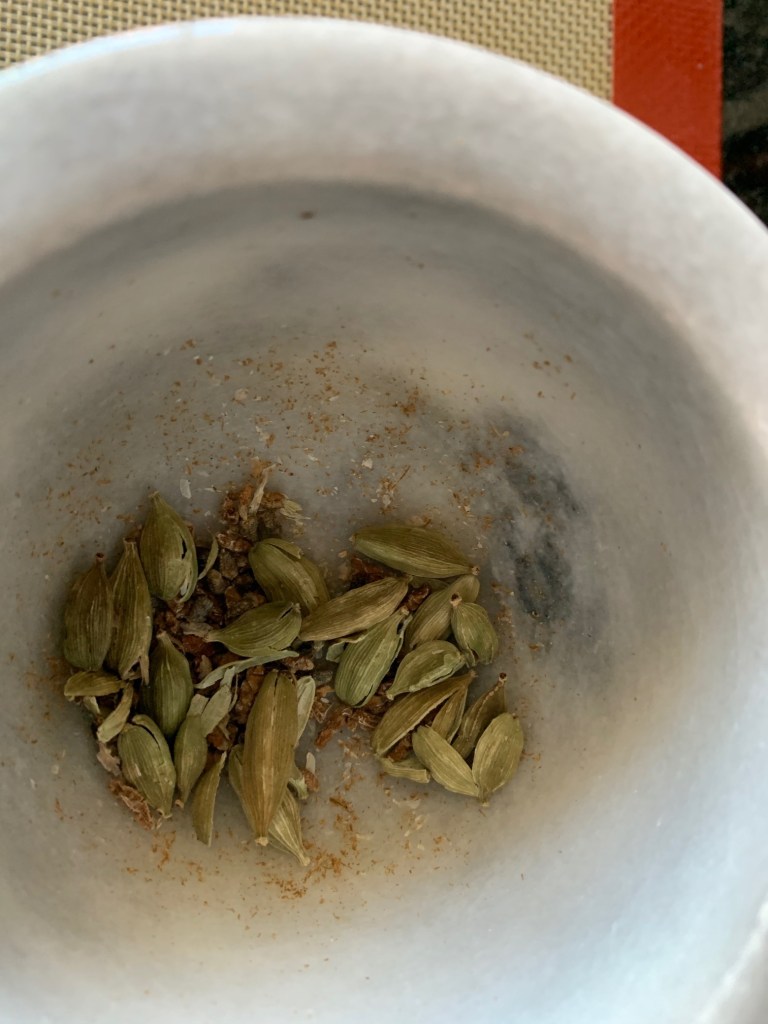
With your hands, remove the pods, discard, and then, using your pestle to crush the seeds. So worth it.
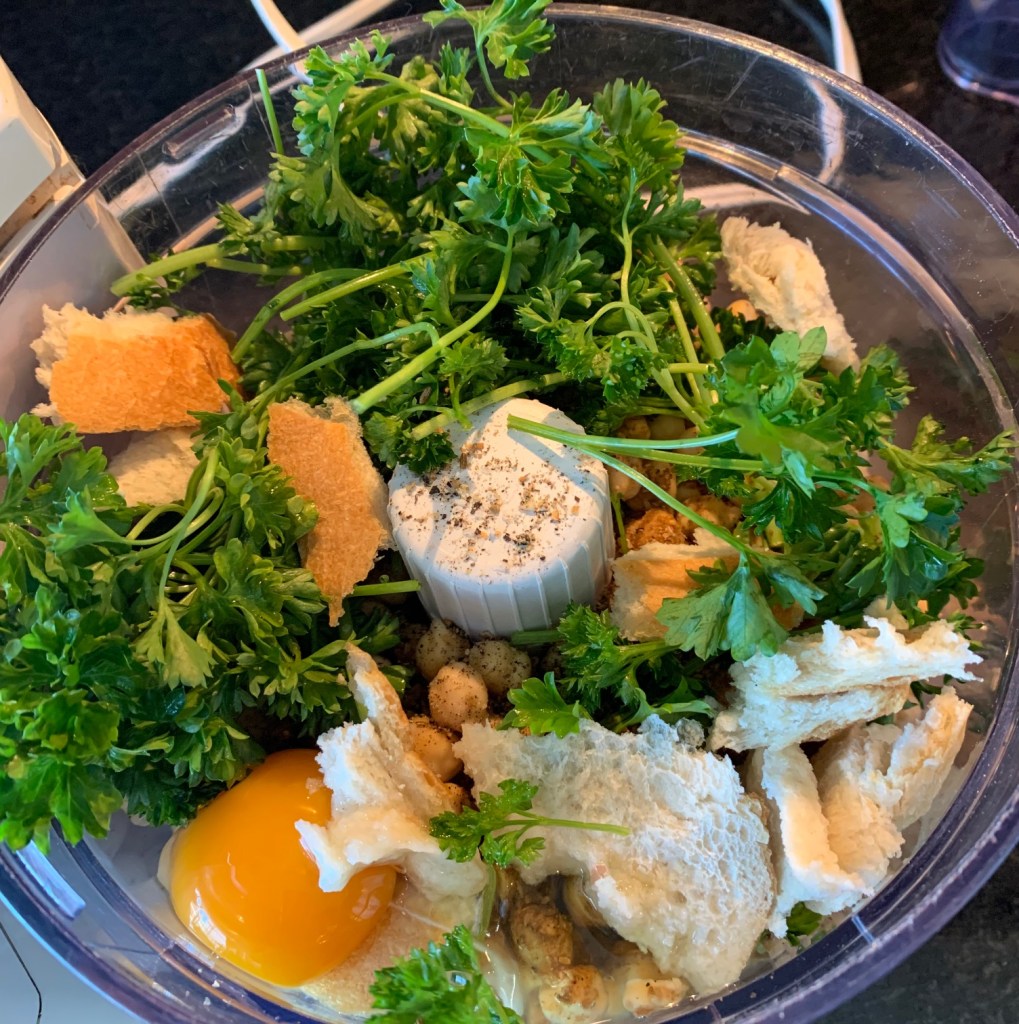
Dump the following in your food processor: chick peas, 1 cup of fresh parsley or coriander, one egg, one piece of torn bread, one garlic clove, the ground cumin, coriander, cardamom, 1 tsp of baking powder, then salt and pepper to taste.
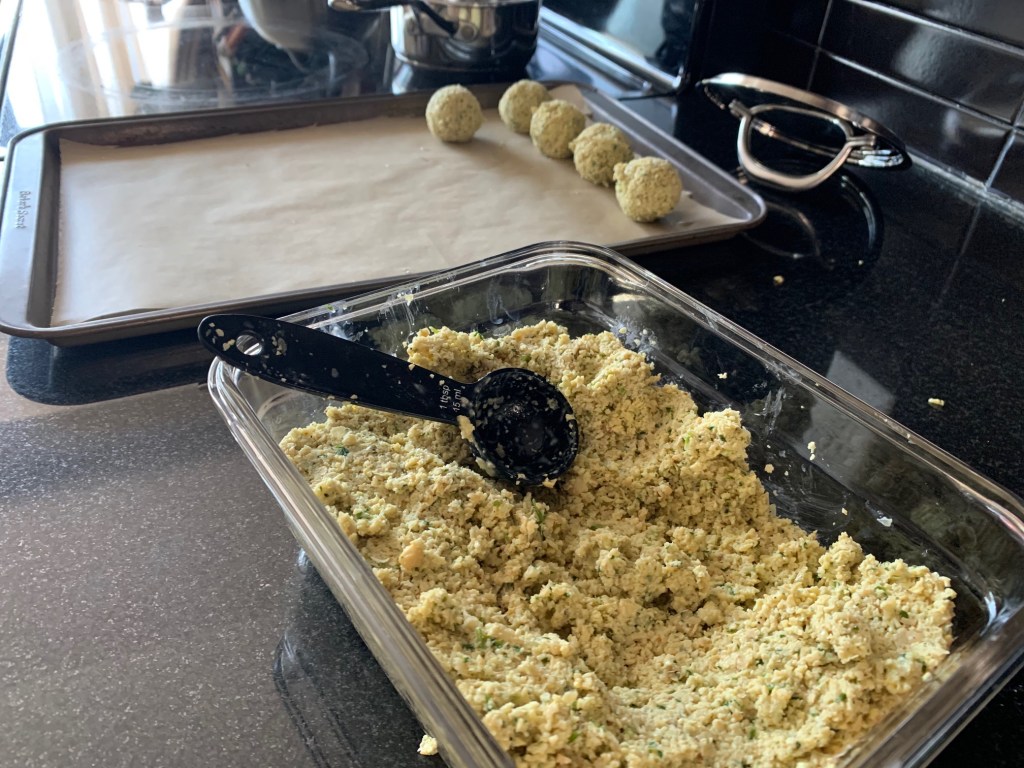
Blitz that until you have a paste that holds together and the dried chickpeas aren’t like little rocks (this last part is how I ruined my first batch). Looks like this.
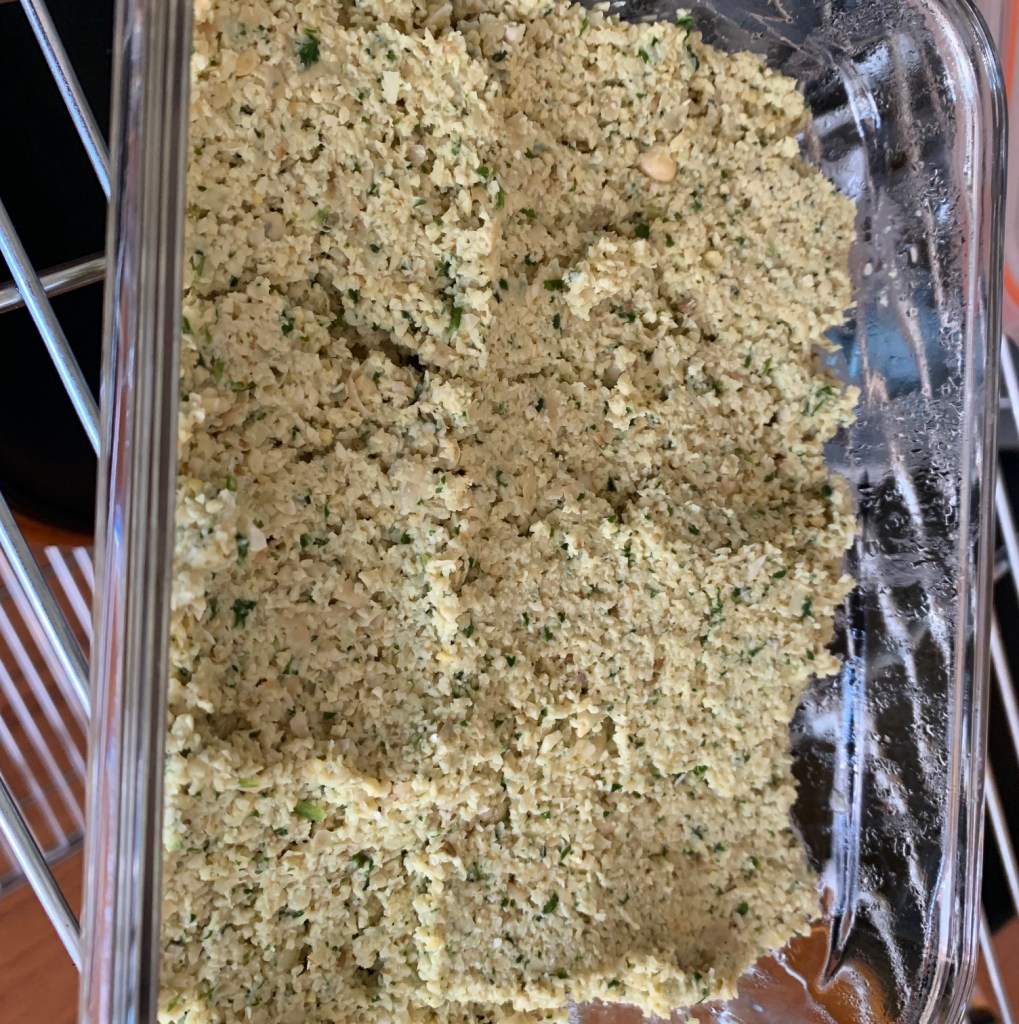
At this point you can cover your falafel mix, pop it in the fridge for up to a day, and work on your next components.
Up next: homemade pita. This is a really easy recipe that I could probably tackle but, the truth is, Craig is the dough expert in our household so I gratefully hand the blog over to him. He’s using this recipe with some modifications (including halving the recipe) and if you want to learn via video, here you go.
He takes 1-1/4 cup of all-purpose flour, 1/2 tbsp sugar, 1 tsp of salt, 1/2 tbsp olive oil, 1 tsp of instant yeast, 1/2 cup of warm water. He puts everything into a bowl and hand mixes it until incorporated (a shaggy dough). Then he takes the dough out of the bowl and kneads it by hand, using flour on the surface, for about 8 minutes until it formed a nice ball and wasn’t sticking to things anymore. This is the shaggy look.

This is after kneading and it goes into a bowl, coated with olive oil to prevent sticking, to proof. It looks like this going in.
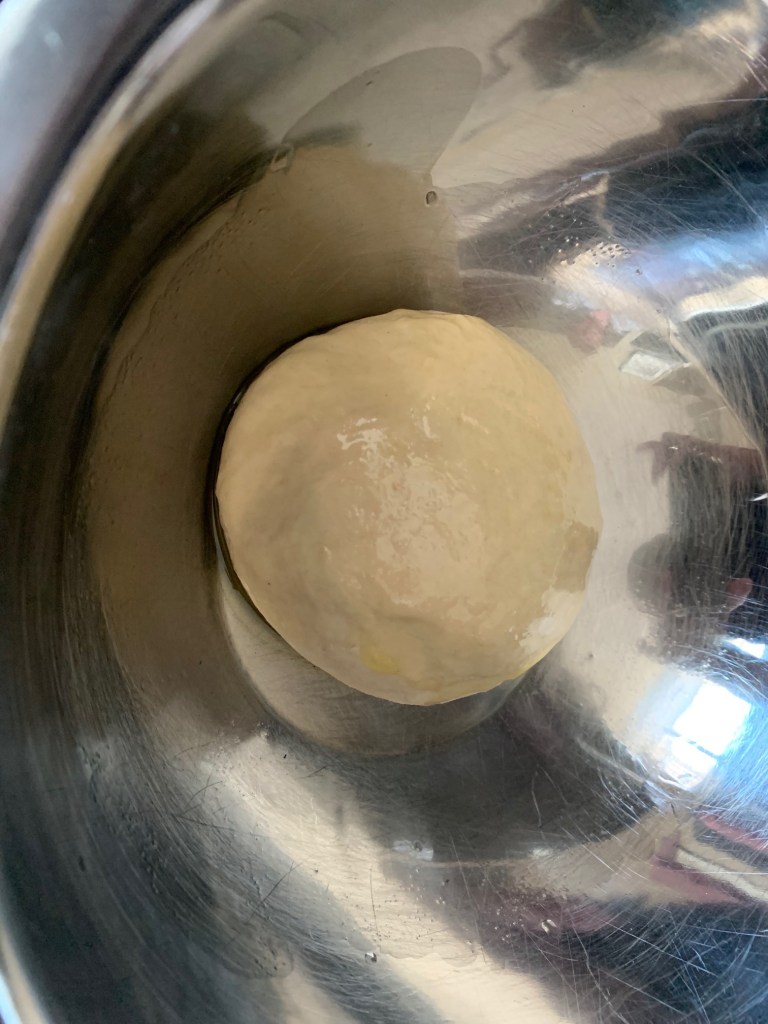
Proof in a warm place, covered with a dish cloth, for two hours. Here’s what you get.
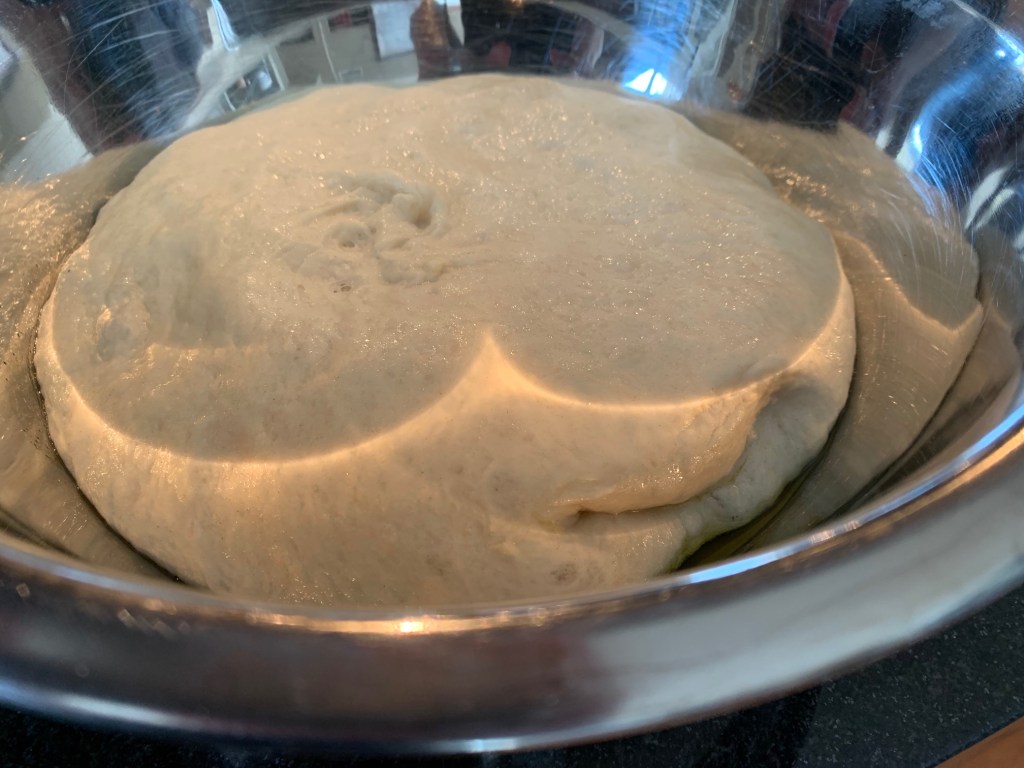
Craig punches it down and that dough goes onto a lightly floured surface. Then he rolls the dough into a log form and, using a bench scraper, he cuts the dough into 5 equal-sized pieces.

The gluten is largely formed at this point, so Craig doesn’t want to overwork the dough. He takes each piece and works it until the surface is smooth, folding the shape inward so you’re continually stretching the surface until it’s nice and even and smooth. Looks like this.
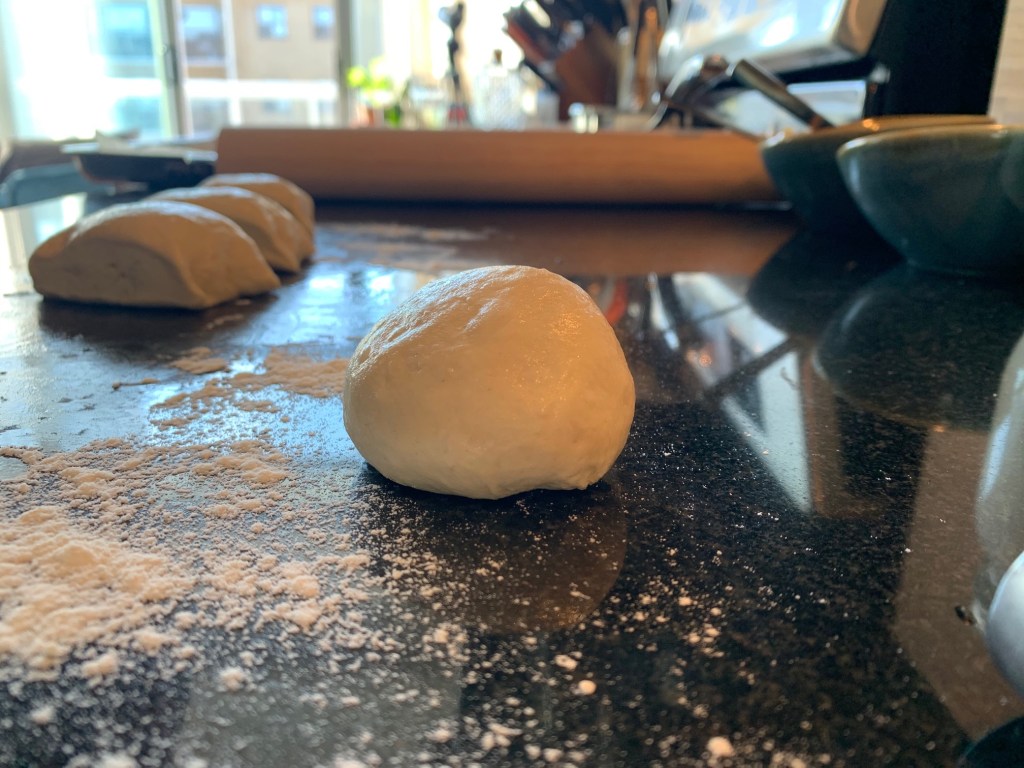
Once the pieces have been formed into balls, he covers them with a damp dish cloth and lets them rest for 30 minutes. Then he takes a rolling pin and rolls them out to a 6-inch circle of even thickness (about 1/4 inch). Looks like this.
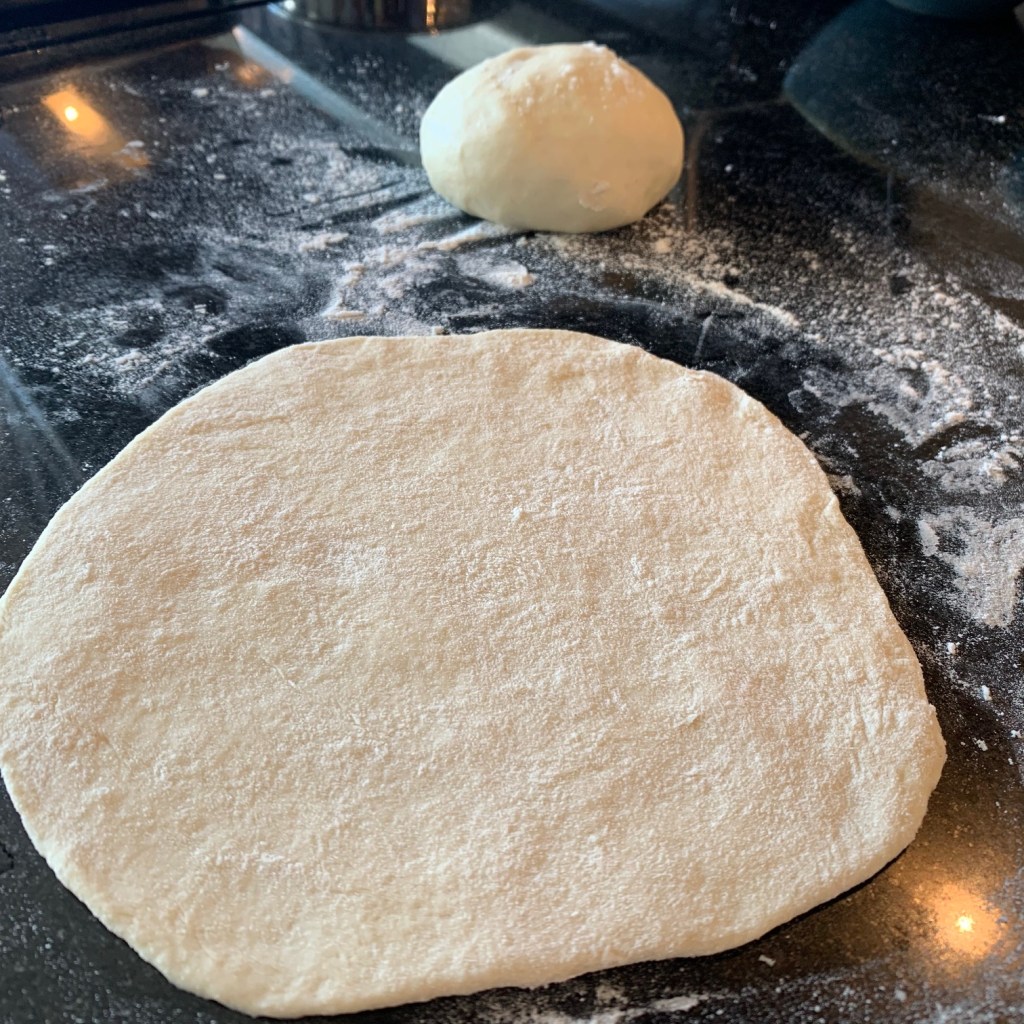
He’s got all 5 pitas rolled out, he puts them on a cookie sheet, sprinkles some flour and covers with a damp dish cloth. They rest for another half hour, covered with a dish cloth.

These pitas are ready to fry! And so I’m now back at the helm. I take a hot cast iron pan on medium-high heat, very lightly oiled (with a neutral oil). I place the pita into the pan and when I start to get brown spots on the underside, I flip it (about a minute). Now I let the dough tell me when it’s ready: with any luck, the steam within the dough will start to do its magic and the pita will puff up to form a pocket. Like this. It’s fun and it feels like magic.
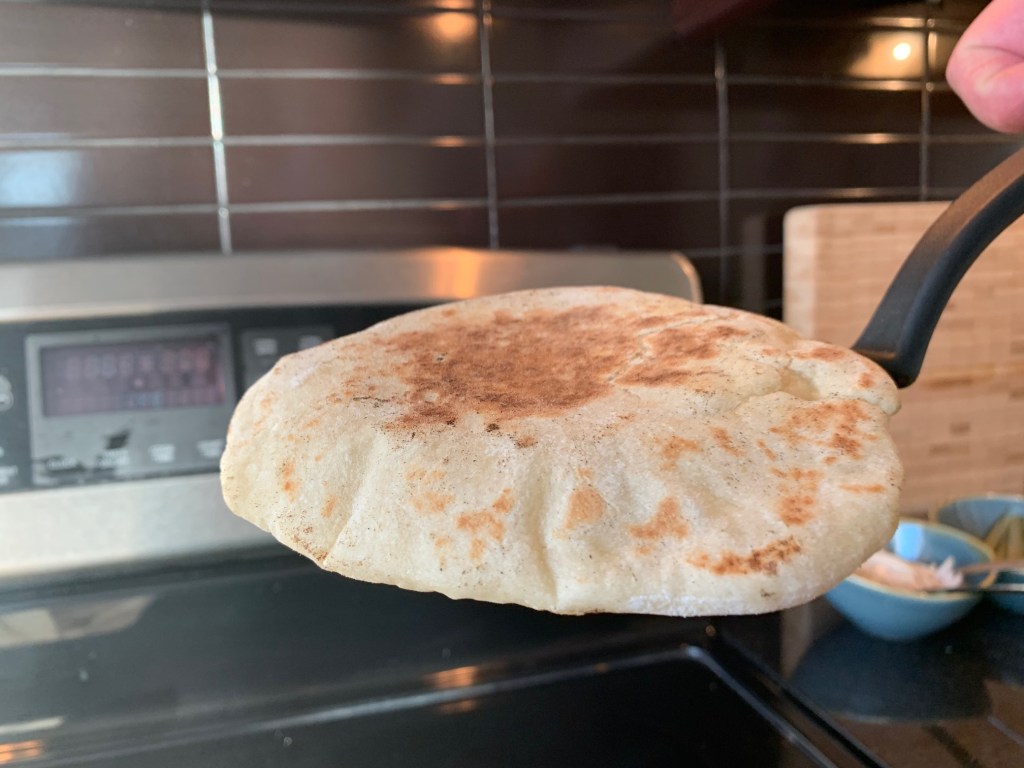
Don’t worry if the steam doesn’t form a pocket; you can use the pita as a wrap instead of opening the pocket and stuffing it. Place your warm pitas in a bowl and cover it with a dry dish towel.
As the dough was resting I worked on the toppings.
For the tahini sauce, I take 1/4 cup tahini, 1/4 cup water, the juice of one lemon, and one minced garlic clove (salt and pepper to taste) and mix that until it’s a nice drizzly sauce.
I prefer toum (garlic sauce) for falafel but I’ve got homemade tzatziki in the fridge so it’s going into the sandwich: 1 cup yogurt, juice of half a lemon, one minced garlic clove, 1/4 cup shredded cucumber (salted and juices squeezed out), and mixed herbs (only because I didn’t have dill on hand).
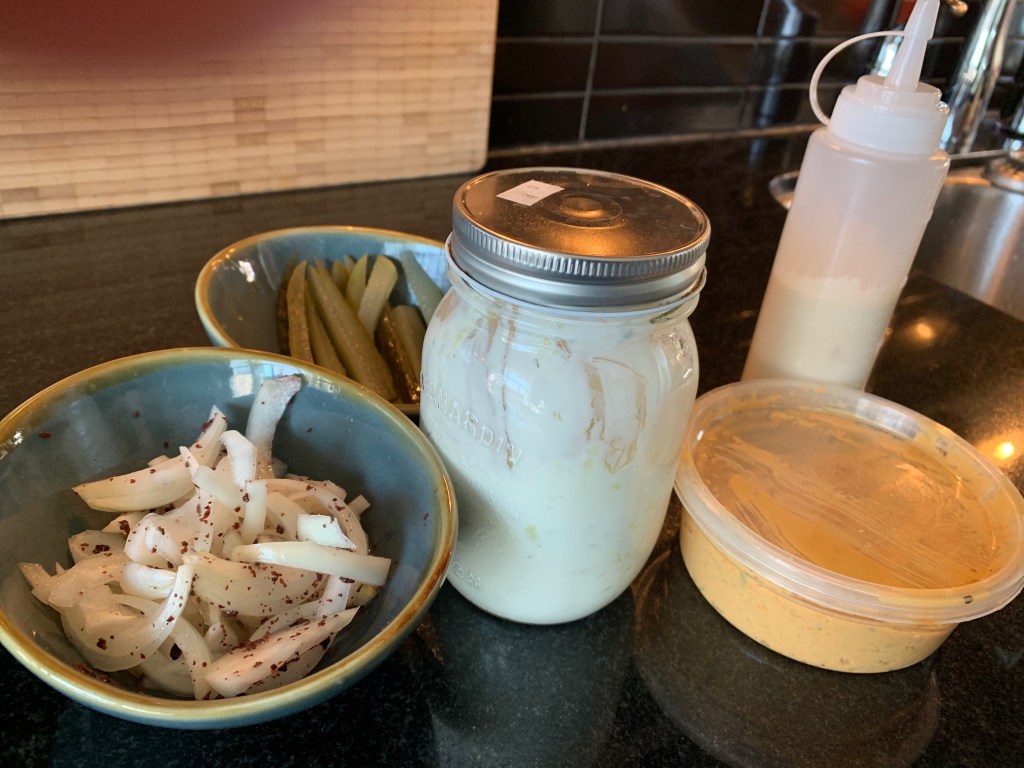
I slice some onions and marinate them in lemon juice and sumac. And I cut dill pickles into thin spears. I adore the traditional pickled turnip that goes on falafel but don’t have the ingredients on hand. There’s a tub of hummus that’ll get used for the sandwich too. Toppings ready to go.
I take my falafel mixture out of the fridge and form them into balls, like this.
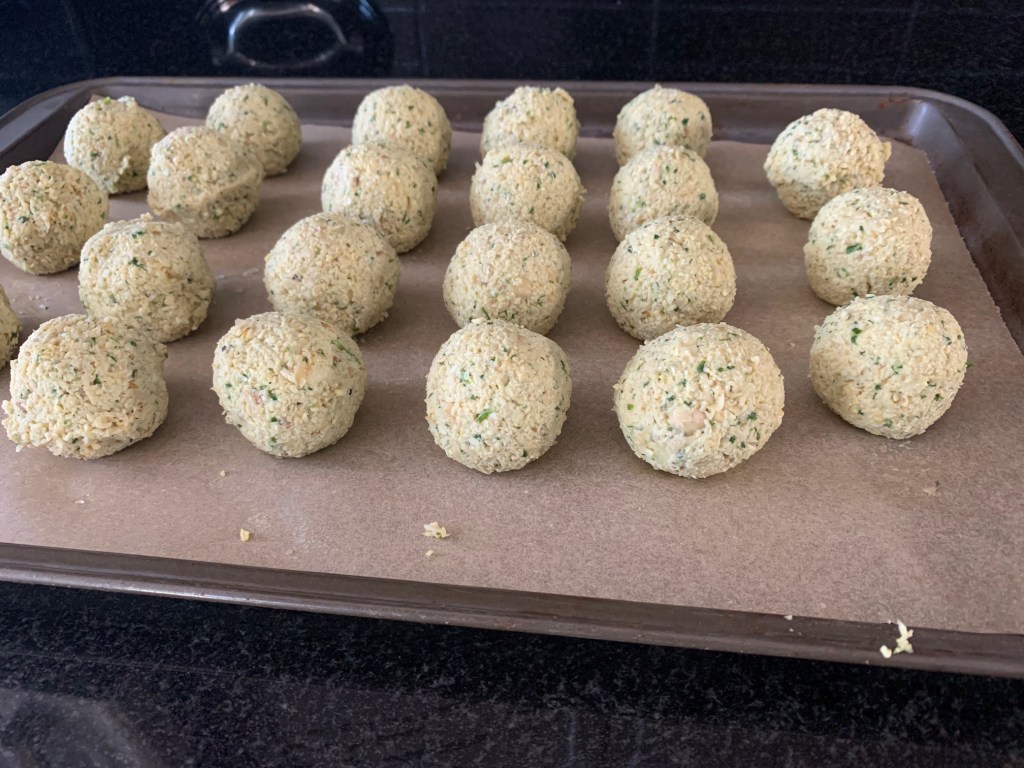
Time to cook the falafels. Here, I’m out of my comfort zone. You could bake the falafels, which is my comfort zone, but frying them in oil is far superior. Craig to the rescue, again, because he’s perfectly comfortable working with oil and high heats. In a small saucepan, Craig puts enough neutral oil so the falafel balls can be halfway submerged (oil temp: about 350 degrees F).
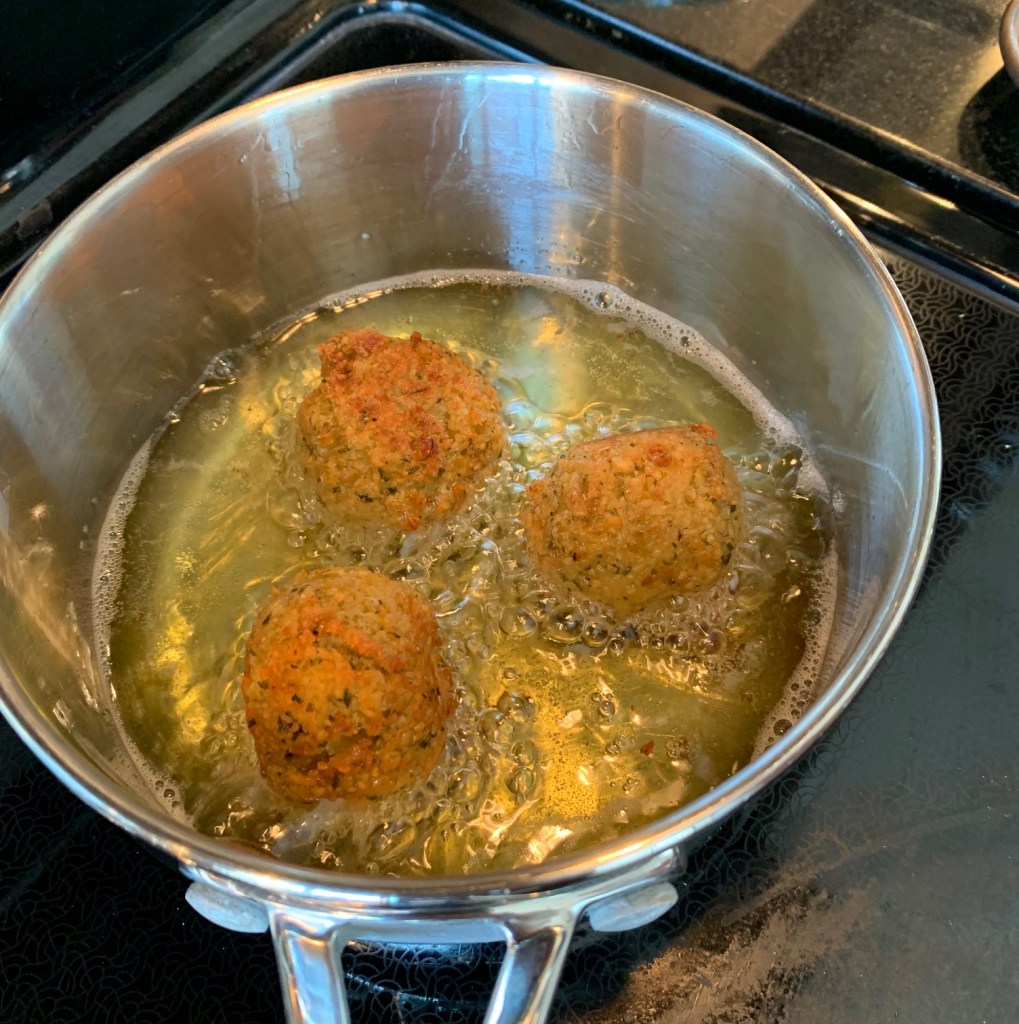
Using a spoon, he gently drenches the tops of the balls until the bottoms were brown, then he rotates the balls and does the same to the tops until they are golden brown, crispy on the outside, fluffy on the inside. Looks like this. They are perfect.
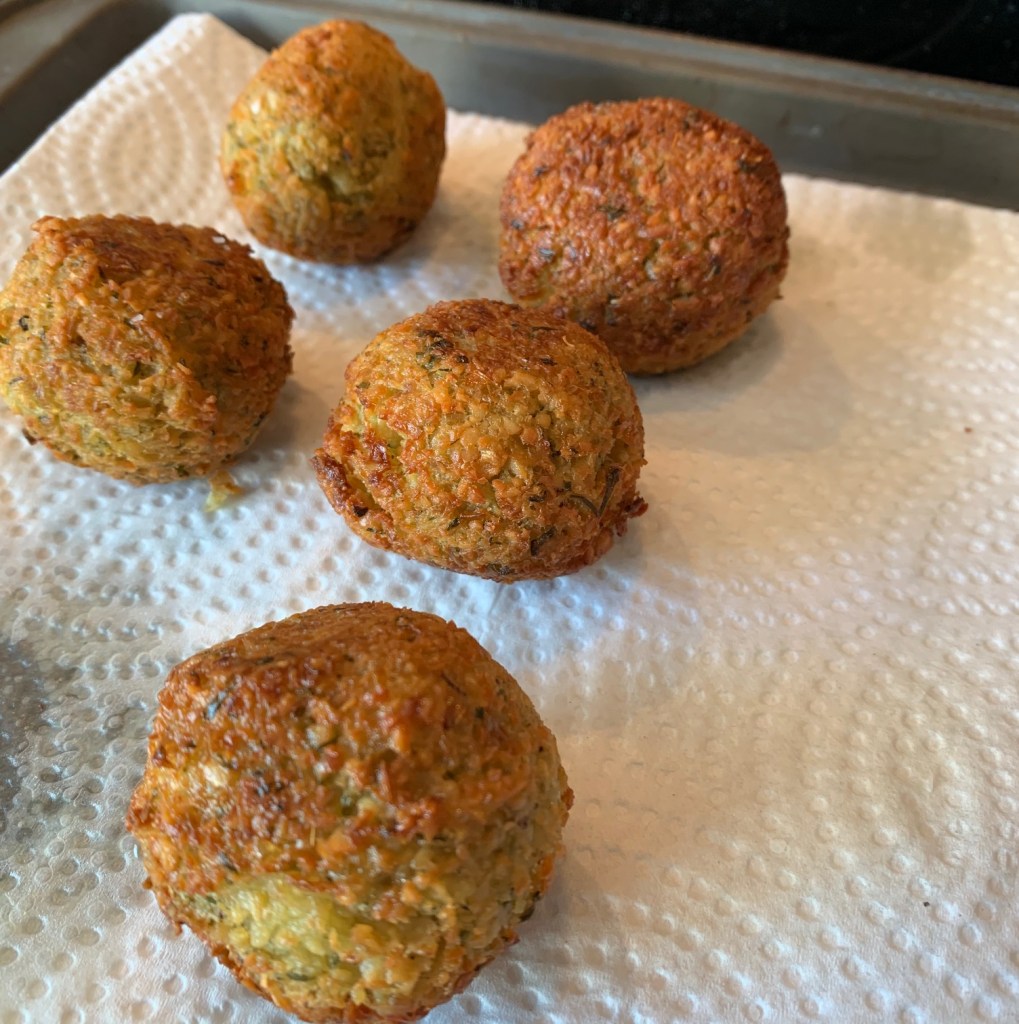
It feels like we started this project years ago but, alas, we are ready to build a sandwich!

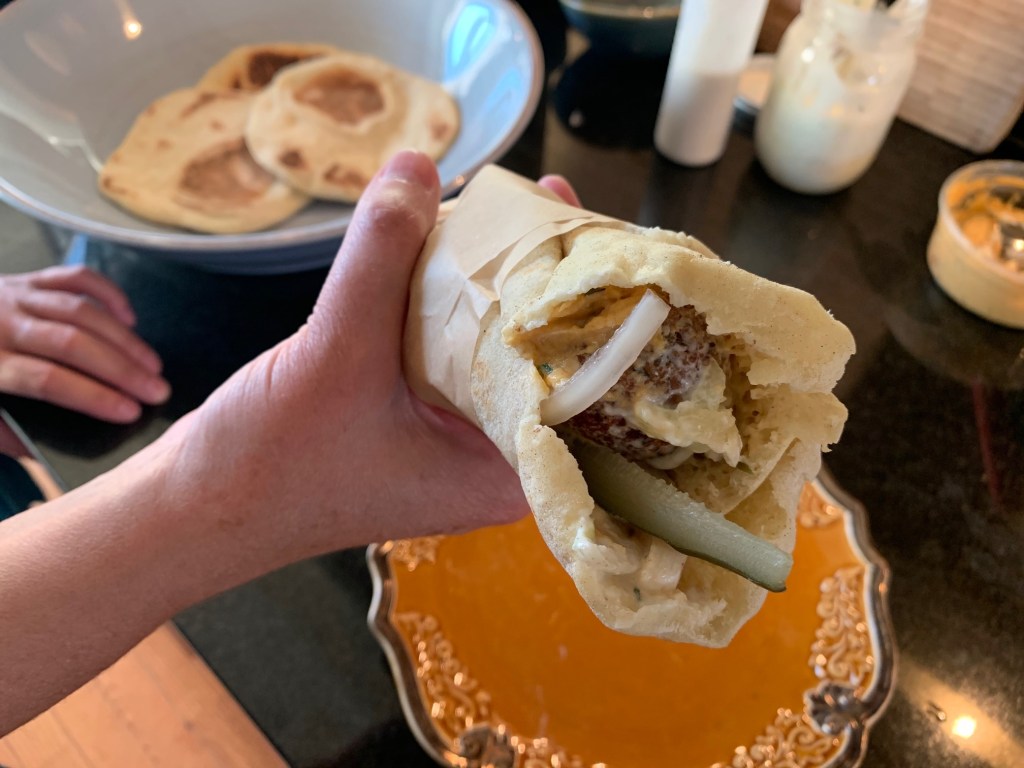
I open a pita at the top and spread hummus and tzatziki on the inside; in go the falafels; then I add the toppings and a generous drizzle of tahini. Wrap that sandwich and appreciate all of the labour and love that went into this perfect sandwich.
— Trish Hennessy, with Craig Pickthorne
 A Year in Sandwiches